How to Teach Solving Similar Triangles
When students work with similar triangles, two things tend to give them the most trouble: identifying the corresponding sides and setting up a correct proportion. Even students who know how to solve a proportion can struggle if they aren't sure which sides belong together or how to arrange them in the equation.
In Unit 7, Lesson 4 of the Geometry Sidekick curriculum, we use three strategies to help with this.
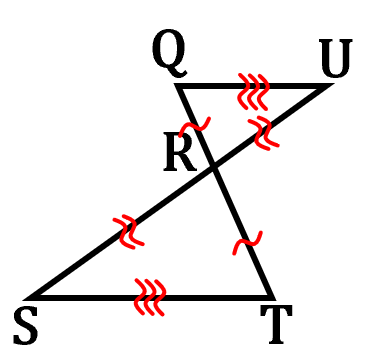
- Mark corresponding sides with the similarity symbol.
When students are given a pair of similar triangles, we have them mark the corresponding sides with matching similarity symbols (∼). We know this isn't technically the correct use of the symbol, but it gives students a visual reminder of which sides correspond. It's similar to how we mark congruent sides with matching tick marks.
- Have students use the order of the letters.
We also remind students to use the order of the letters in the similarity statement. For example, if ΔABC ∼ ΔDEF, then AB and DE correspond because they are both the first two letters in the similarity statement. Sometimes using the letters is easier than using the picture.
- Check the proportion in four directions before solving.
Once students have created a proportion, we teach them to check that there are four relationships (top, bottom, left, and right).
On the set of similar triangles below, here are two proportions that are valid because the left, right, top, and bottom of the proportions all have relationships:
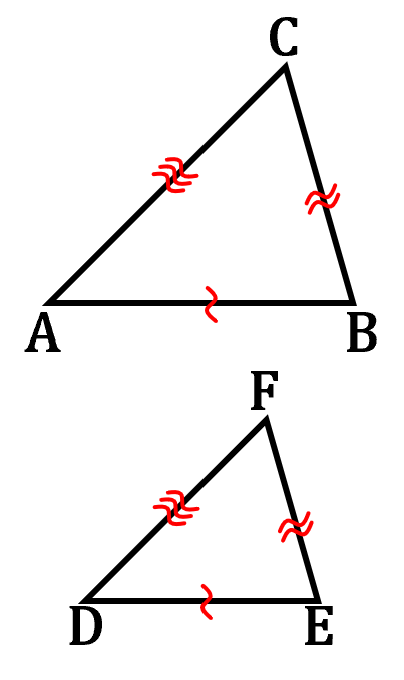
Proportion 1
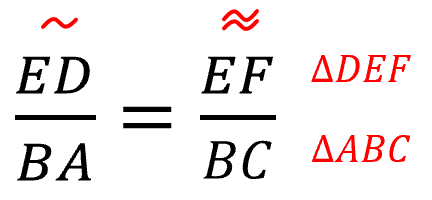
In this example:
- Left: ED and BA are corresponding sides.
- Right: EF and BC are corresponding sides.
- Top: ED and EF are from the same triangle.
- Bottom: BA and BC are from the same triangle.
Proportion 2
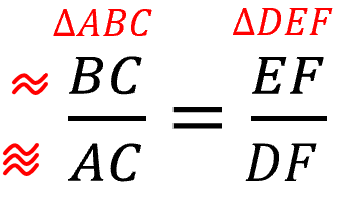
In this example:
- Left: BC and AC are from the same triangle.
- Right: EF and DF are from the same triangle.
- Top: BC and EF are corresponding sides.
- Bottom: AC and DF are corresponding sides.
If all four checks work, students know they've set up the proportion correctly before they start solving.
The lesson at a glance
- Course: High School Geometry - Unit 7, Day 4
- Common Core Standard: HSG-SRT.B.5: use congruence and similarity criteria for triangles to solve problems and to prove relationships in geometric figures
- You need:
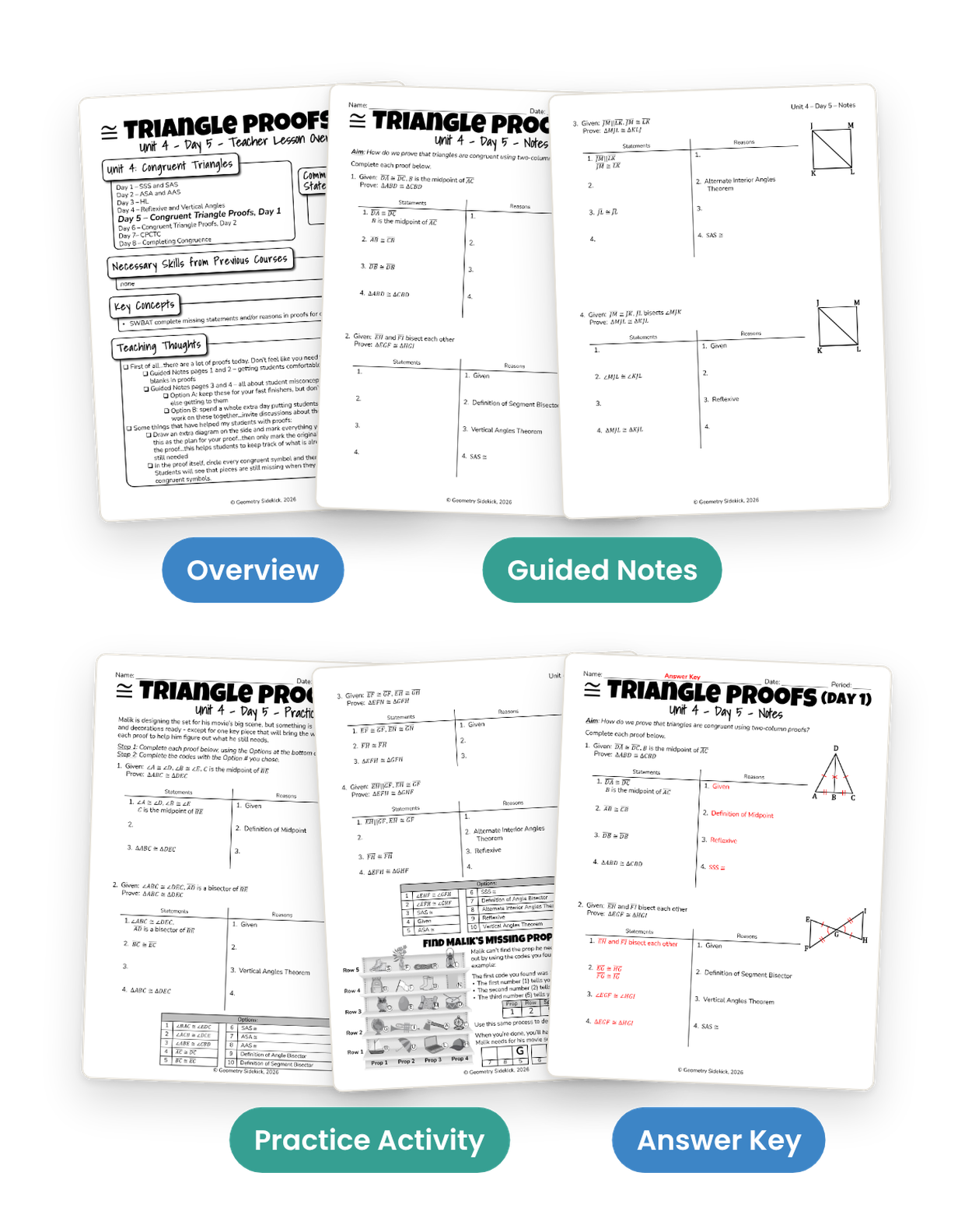
- Guided notes (2 pages)
- Practice activity (2 pages)
- Skills to refresh first:
- Solving proportions (usually by cross-multiplying)
- SWBAT:
- understand the proportional relationships that exist between corresponding sides of similar figures.
- use proportions to find the missing sides of similar figures.
Unit 7, Day 4: Solving Similar Triangles
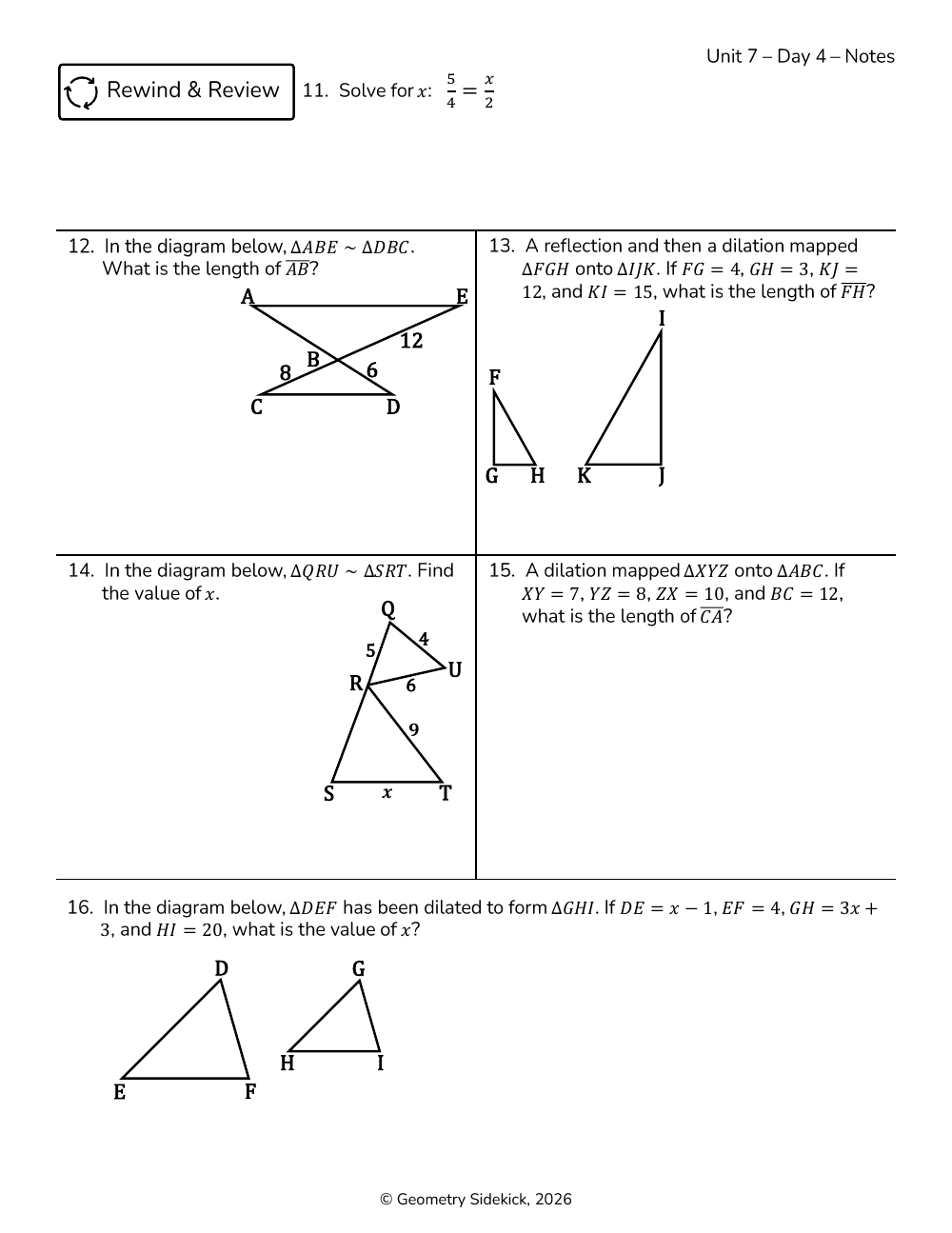
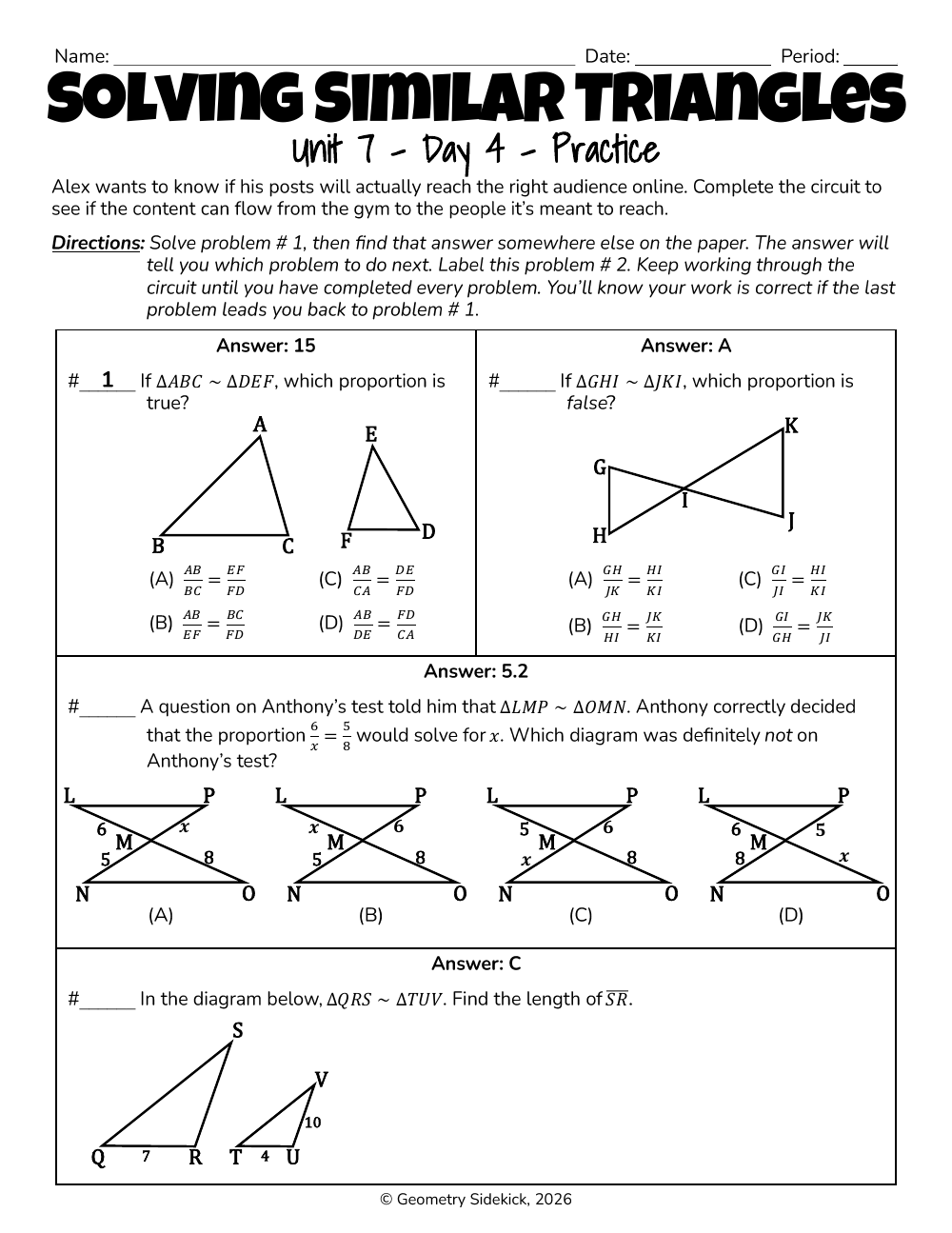
This lesson includes guided notes and a circuit practice activity.
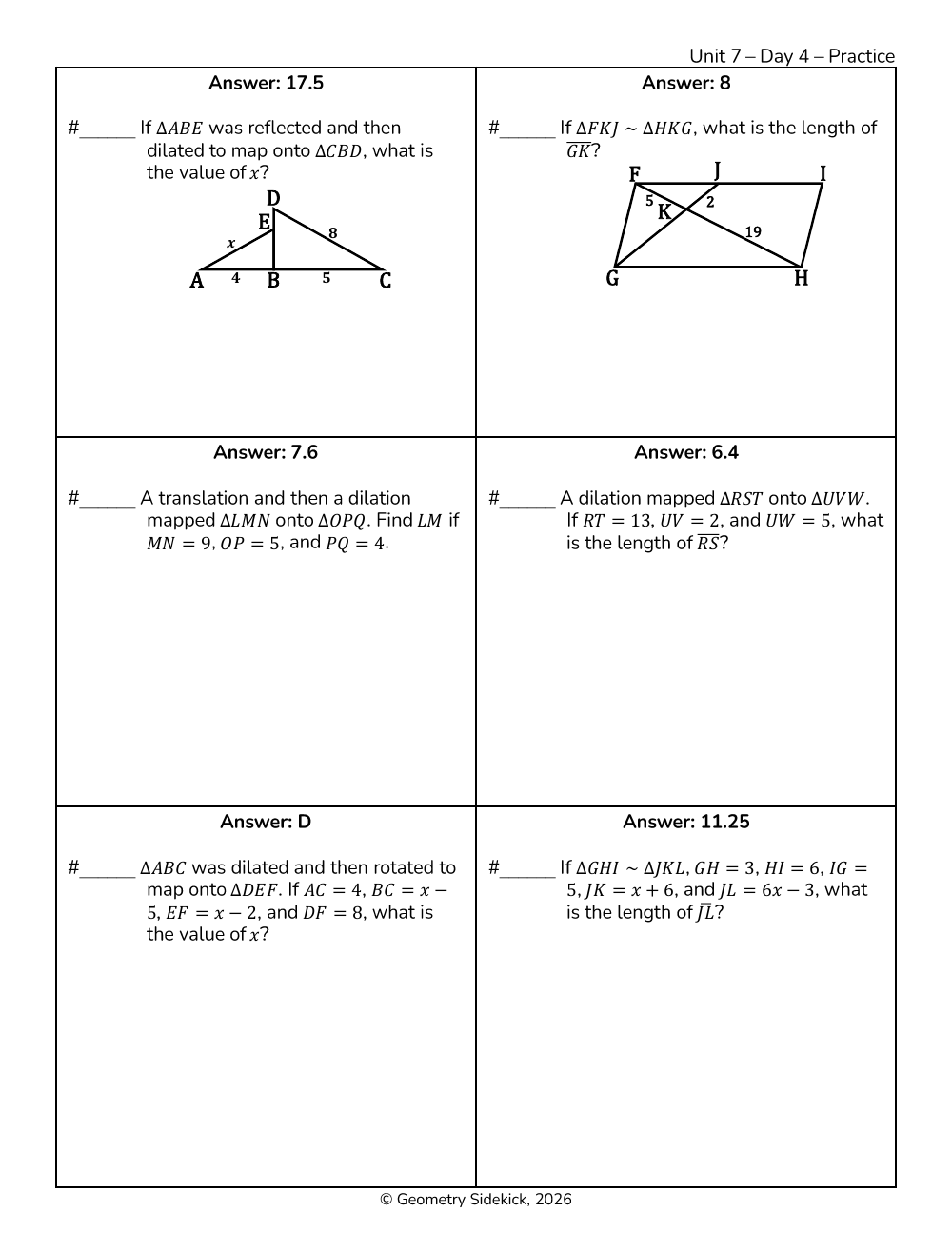
Like every practice activity in the Geometry Sidekick curriculum, the circuit is self-checking. Every box has an answer printed at the top. Students solve a problem, find their answer at the top of another box, and that box becomes the next problem they complete.
Once they've answered all ten questions, the last answer should lead right back to the first problem. If it does, they've answered everything correctly. If not, they'll know they need to go back and check their answers.
Students can discover on their own whether they're correct. No waiting for you to check their work, and no answer key needed just to see if they got it right.
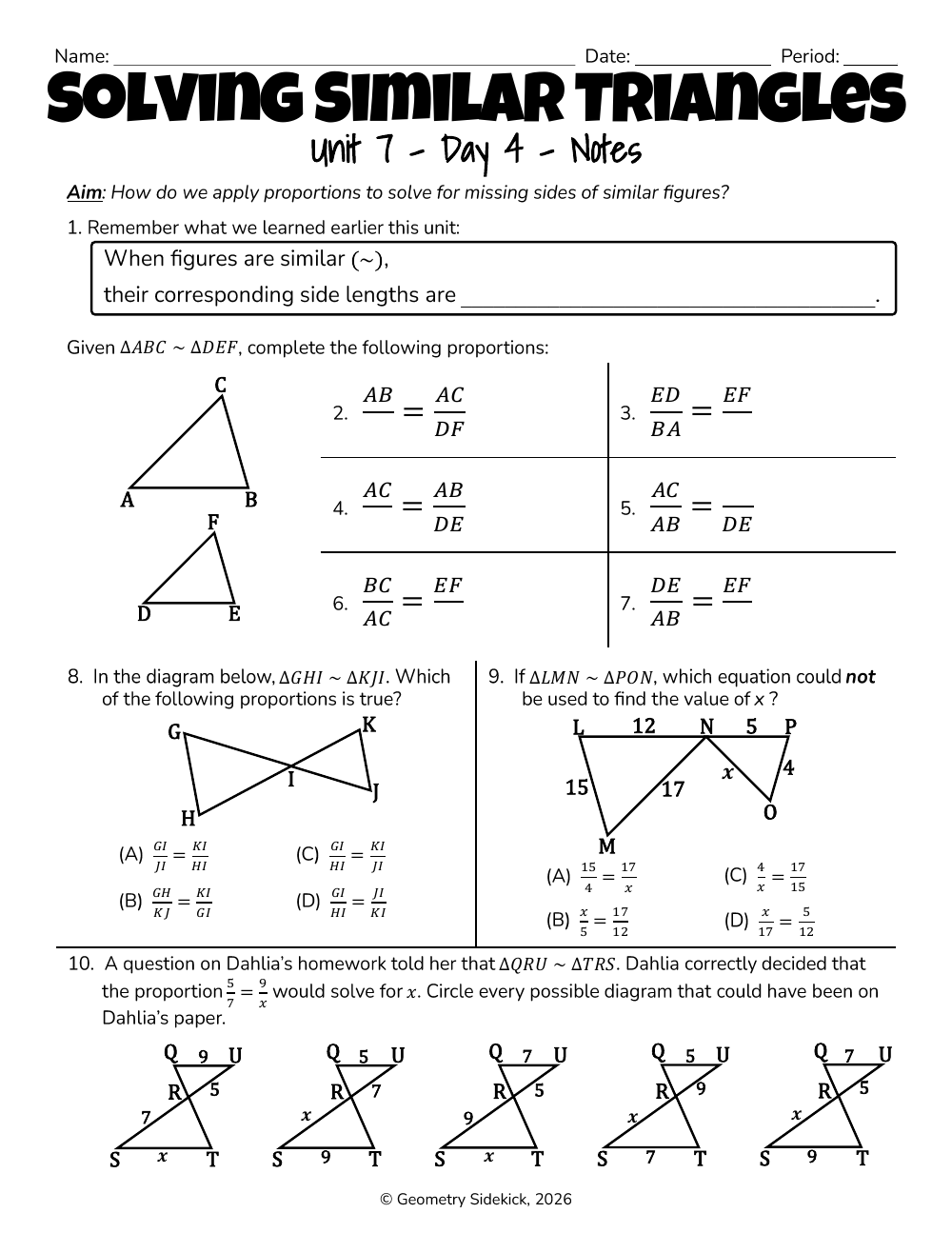
The files
We are teachers, your email is safe with us. Unsubscribe anytime.
This lesson is from our Unit 7 (Similarity)
- 7.01 Dilations on the Grid
- 7.02 Dilations of Lines
- 7.03 Sequences of Transformations
- 7.04 Solving Similar Triangles
- 7.05 SSS and SAS Similarity
- 7.06 AA Similarity
- 7.07 Triangle Proportionality
- 7.08 Right Triangle Similarity
See every unit in the membership
THE MEMBERSHIP
Want every Geometry lesson, ready to teach?
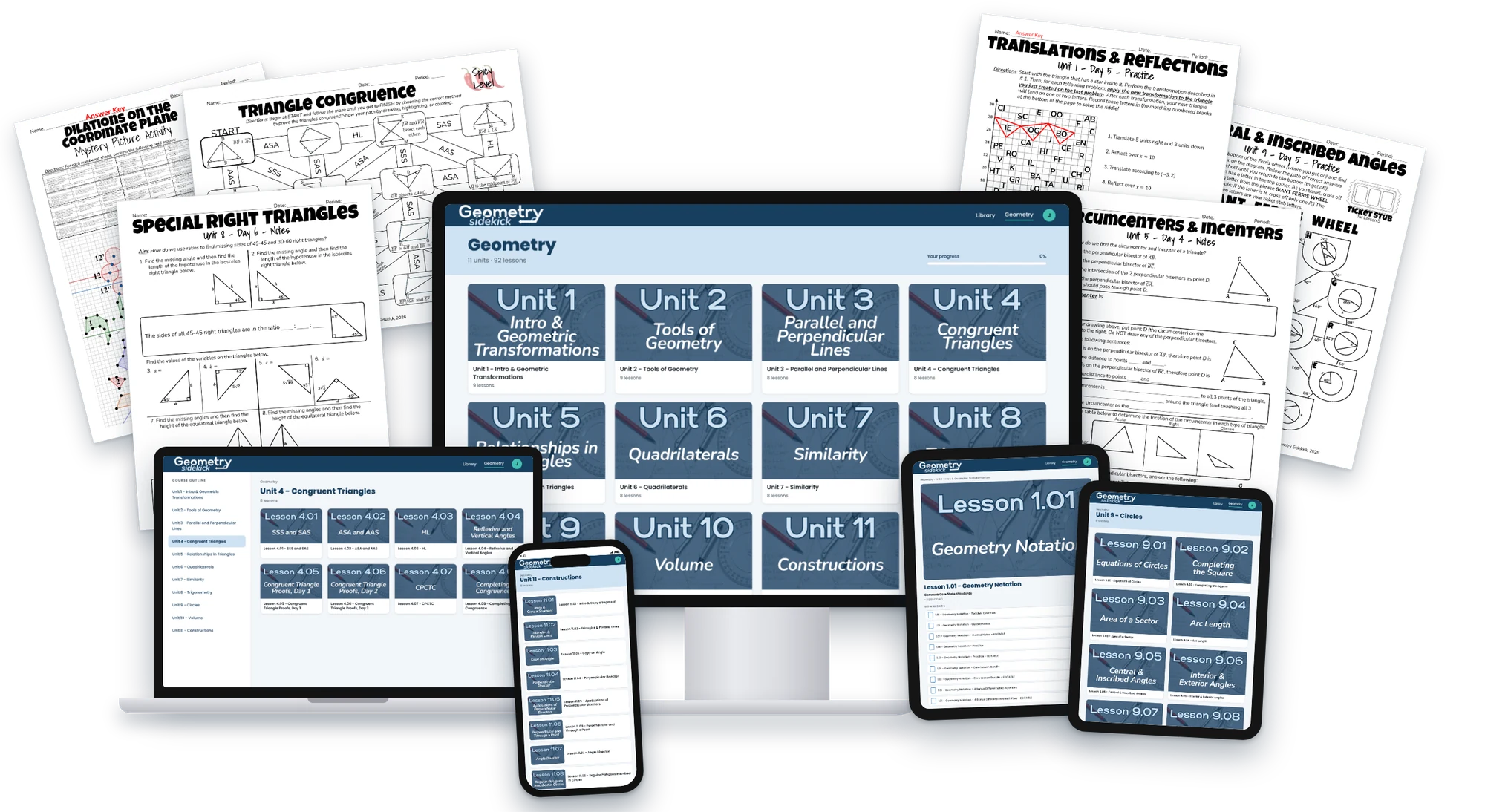
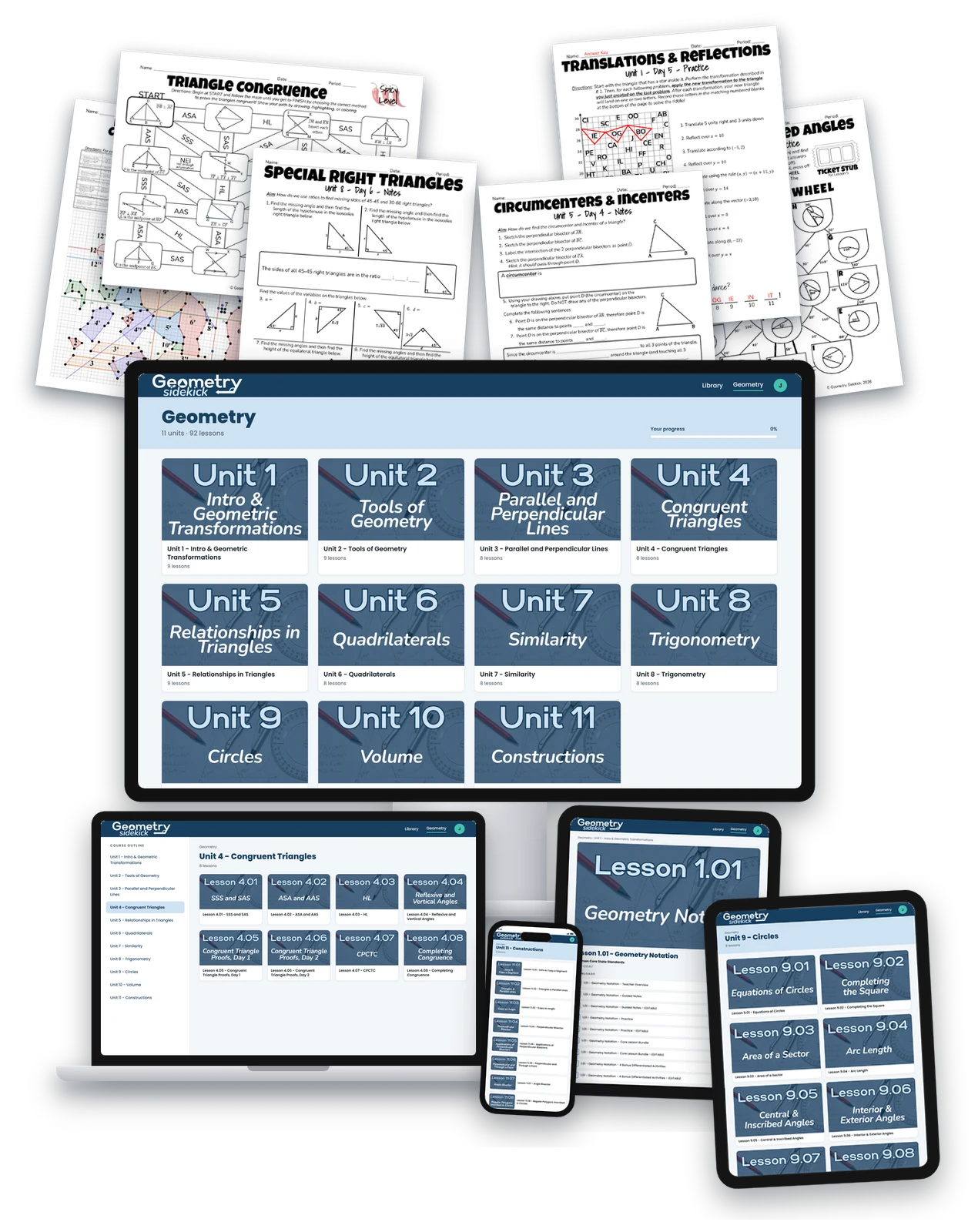
All 11 units with 92 total lessons, each with a teacher overview, guided notes, a practice activity and a fully worked answer key. Available as a PDF or an editable PowerPoint. Members also get access to bonus differentiated activities for selected lessons across the curriculum. Open the lesson you need tomorrow, print it, teach it.
Join Membership